
Types of Water Heaters, Compared Spec by Spec
| Type | Rated efficiency (UEF) | Typical lifespan |
|---|---|---|
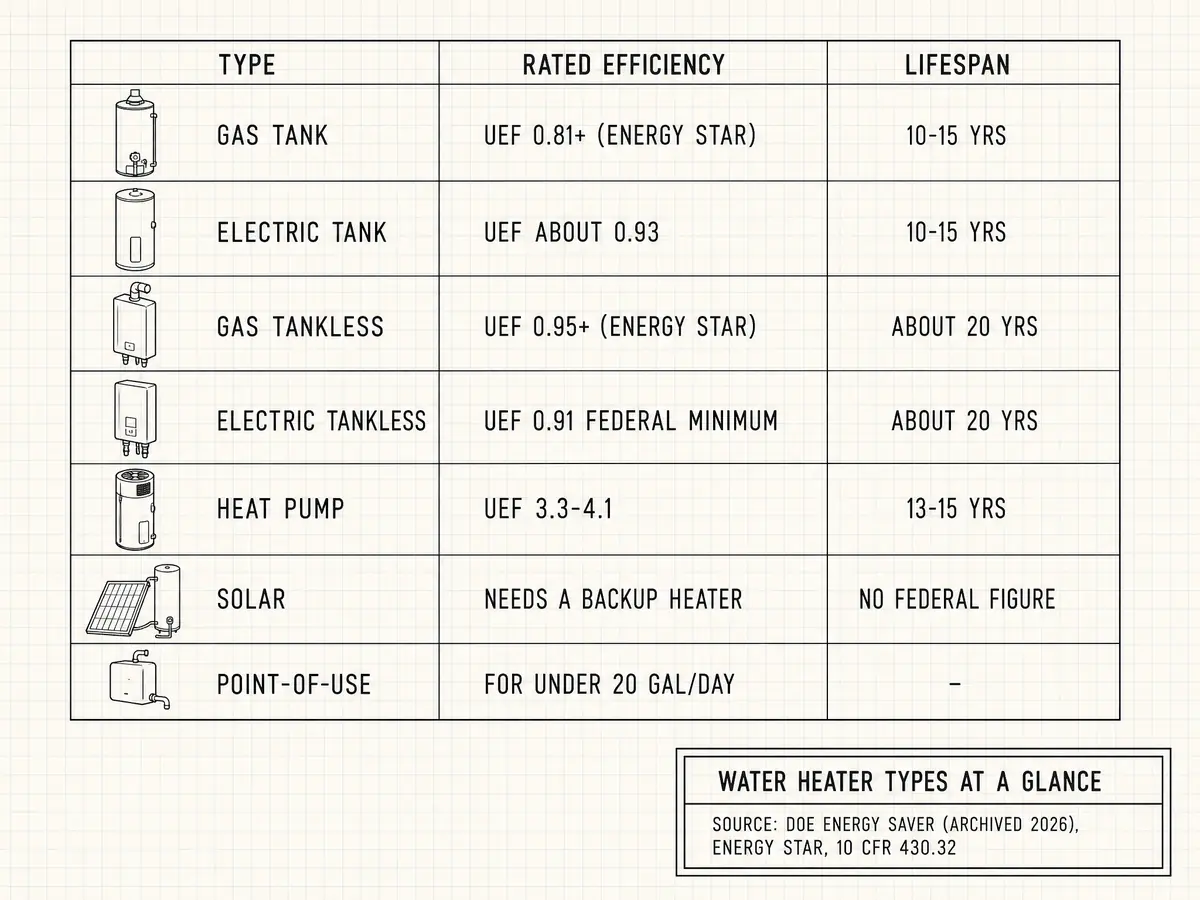
| Tank | About 0.56 gas minimum (50 gal) · about 0.93 electric | 10–15 years |
| Tankless | 0.81 gas minimum · 0.95+ ENERGY STAR gas · 0.91 electric minimum | About 20 years |
| Heat pump | 3.3–4.1 (ENERGY STAR certified) | 13–15 years |
Sources: DOE Energy Saver (archived), ENERGY STAR, 10 CFR 430.32
The main types of water heaters are gas and electric tanks, gas and electric tankless units, heat pump models, solar systems and point-of-use heaters, and they differ most in efficiency, output, lifespan and installation needs.
Compiled by the Tank & Tankless desk · Revised
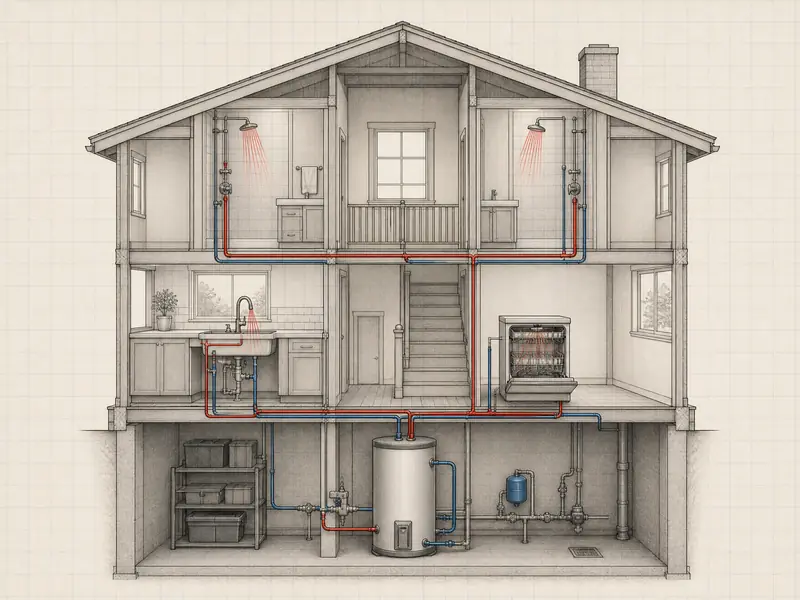
Type index
| Type | How it heats |
|---|---|
| Gas tank | A burner heats a stored tank of 20-80 gallons |
| Electric tank | Two resistance elements heat the stored water |
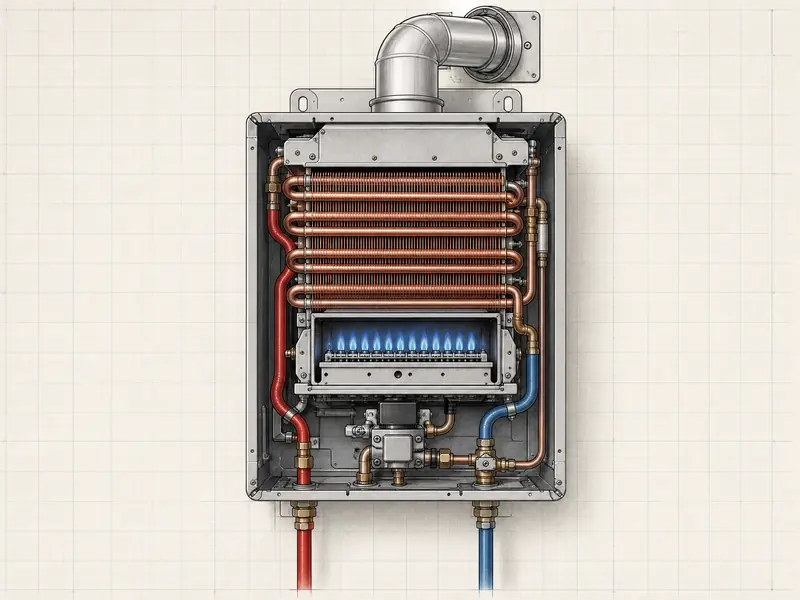
| Gas tankless | A burner fires only while hot water flows |
| Electric tankless | Elements heat water on demand; flow is limited |
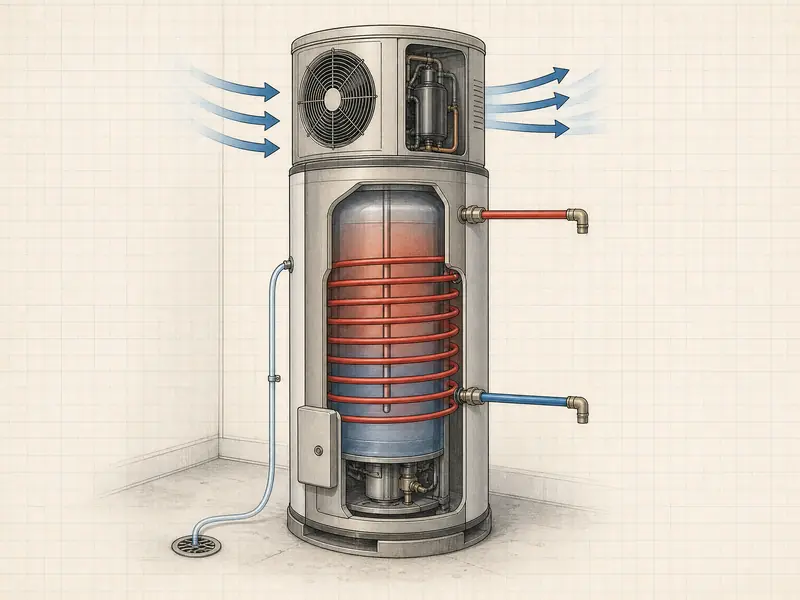
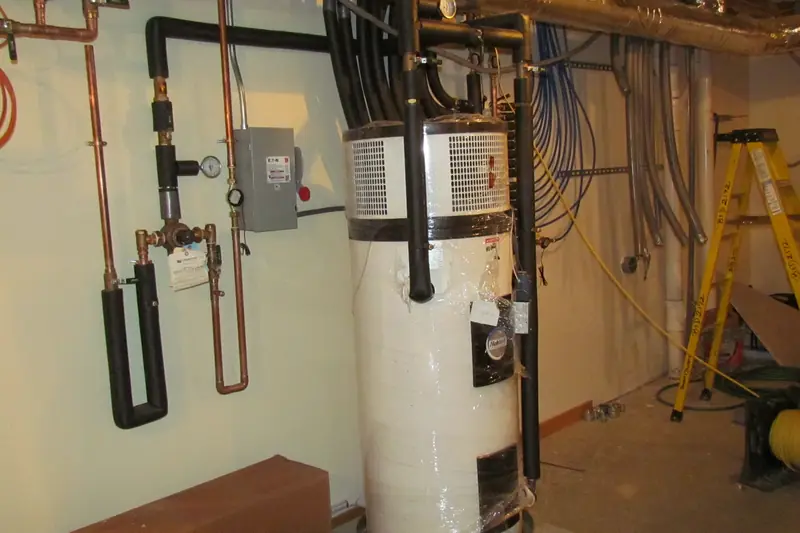
| Heat pump | Moves heat from room air into the tank |
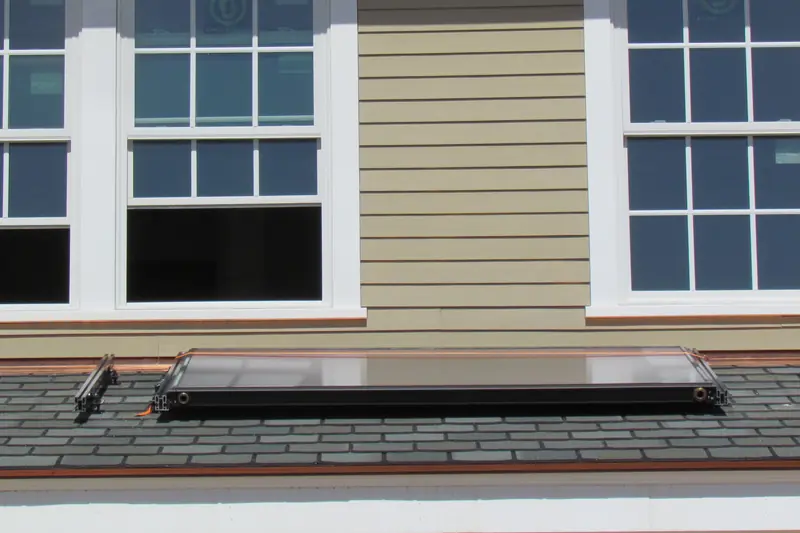
| Solar | Roof collectors preheat; a backup heater finishes |
| Point-of-use | A small unit at one sink or fixture |
| Combi and indirect | The home's boiler also makes the hot water |
At a glance
- Heating water takes about 18% of a home's energy, the second-largest energy cost in most homes, per DOE Energy Saver (archived).
- ENERGY STAR counts standard electric tanks and natural gas tanks as more than 80 percent of the water heaters in US homes.
- Rated efficiency spans a wide band: about 0.56 UEF for a minimum-standard 50-gallon gas tank, about 0.93 for an electric tank, 0.95+ for an ENERGY STAR gas tankless unit and 3.3–4.1 for certified heat pump models.
- Expected life is 10–15 years for tanks (DOE), 13–15 for heat pump models and about 20 for tankless units (ENERGY STAR).
- Under the May 2024 DOE rule, most new electric tanks must reach heat pump efficiency from May 6, 2029; gas tanks face a moderate increase.
- The federal 25C and 25D credits ended with 2025, per the IRS; state rebates of up to $1,750 for heat pump models exist where launched.
- 18%Share of home energy used to heat waterDOE Energy Saver (archived)
- 3.3–4.1UEF band of ENERGY STAR certified heat pump water heatersENERGY STAR
- about 20 yrsLife expectancy of a tankless water heaterENERGY STAR
- 120°FThermostat setting CPSC urges for home water heatersCPSC
Which types of water heaters are there?
There are five main types: storage tanks, tankless units, heat pump models, solar systems and point-of-use heaters, plus boiler-fed combination systems. Tanks and tankless units come in gas and electric versions; heat pump models are electric; solar systems need a gas or electric backup.
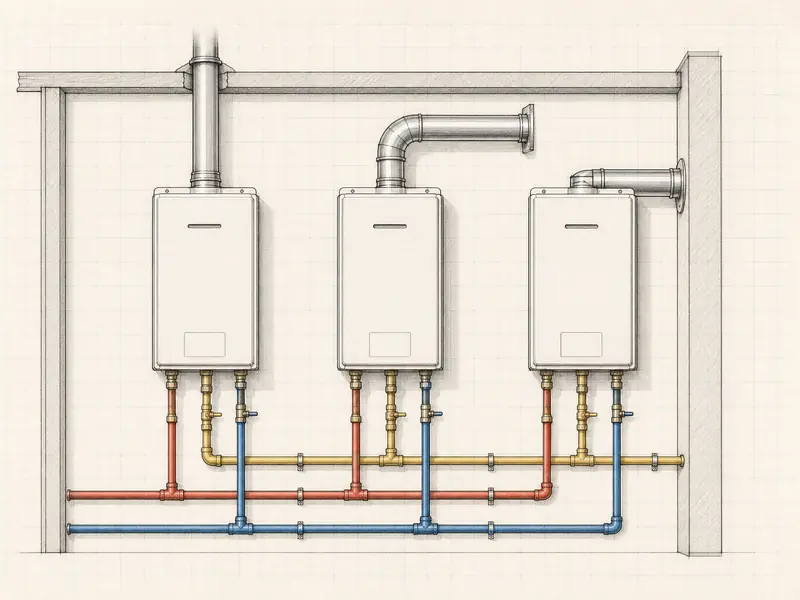
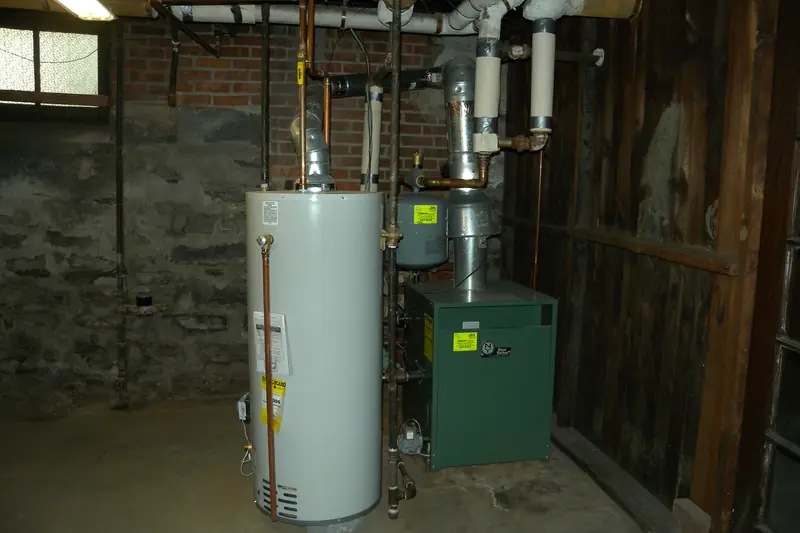
A storage tank keeps 20 to 80 gallons hot and is rated by its first-hour rating. A tankless unit heats water in transit and carries a flow rating: GPM for a stated number of degrees of rise. A heat pump model is an electric tank that moves heat from the room air into the water. ENERGY STAR says a solar system can cut hot water costs in half and is built to work with a backup heater.
Point-of-use heaters sit at a single sink or bath; ENERGY STAR points to them for remote bathrooms and for homes drawing less than roughly 20 gallons daily. Indirect and combination systems heat water from a home's boiler or furnace. Start with the tank section, the tankless section, the heat pump section or the other types section.
| Type | How it heats | Rated efficiency | Output rated as | Typical lifespan |
|---|---|---|---|---|
| Gas tank | Burner under a stored tank | About 0.56 UEF minimum (50 gal); 0.81+ ENERGY STAR | First-hour rating | 10–15 years |
| Electric tank | Resistance elements in a stored tank | About 0.93 UEF | First-hour rating | 10–15 years |
| Gas tankless | Burner and heat exchanger, on demand | 0.81 UEF minimum; 0.95+ ENERGY STAR | Roughly 5 GPM, 70°F rise (DOE) | About 20 years |
| Electric tankless | Elements heat water as it flows | 0.91 UEF minimum | Roughly 2 GPM, 70°F rise (DOE) | About 20 years |
| Heat pump | Compressor moves heat from room air into a tank | 3.3–4.1 UEF (ENERGY STAR certified) | First-hour rating | 13–15 years |
| Solar | Roof collectors plus a backup heater | ENERGY STAR SUEF 3.00 (electric backup) or 1.80 (gas backup) | Collector area and tank size | No federal figure |
| Point-of-use | Small tank or tankless unit at one fixture | Varies by design | Fits use under about 20 gal/day | Varies |
How do the types of water heaters compare on efficiency?
Heat pump models rate highest, then condensing gas tankless units, electric resistance units and, lowest, gas tanks. The uniform energy factor, or UEF, replaced the older energy factor in 2017; ENERGY STAR explains that most conventional heaters land between 0.63 and 0.95, while certified heat pump models reach 3.3 to 4.1.
UEF compares heaters fairly only inside the same usage bin, and DOE cautions that a higher number does not always mean a lower bill across fuels. At 2025–2026 average prices, an electric tank at 0.93 still costs about twice as much per unit of hot water as a gas tank at the 0.56 minimum, because electricity costs more per unit of heat (derived from EIA prices). The efficiency and energy cost guide explains the label and the math.
What do the types of water heaters cost to run?
Running cost depends on fuel price as much as efficiency, which is why gas and heat pump models usually run cheapest and standard electric units cost the most. The FTC EnergyGuide label for a medium-size tank shows $179–235 a year on natural gas and $121–494 on electricity, with heat pump models at the low end, per 16 CFR 305.
The federal programs put dollar figures on the upgrades. ENERGY STAR estimates a certified heat pump model saves a household of four about $550 a year over a standard electric tank, a certified gas tankless unit $95 a year over a standard gas tank, and a certified gas tank $25 a year. Prices move: EIA put residential electricity at 18.16¢/kWh in August 2026.
Head-to-head cost math lives in the compare section, starting with gas vs electric and tankless vs tank.
How long does each water heater type last?
Tankless units last longest, at about 20 years; tanks last 10–15 years and heat pump models 13–15. DOE's archived tankless page adds that tankless units have easily replaced parts that can stretch their life further. ENERGY STAR advises considering replacement once a tank passes 10 years, before it fails.
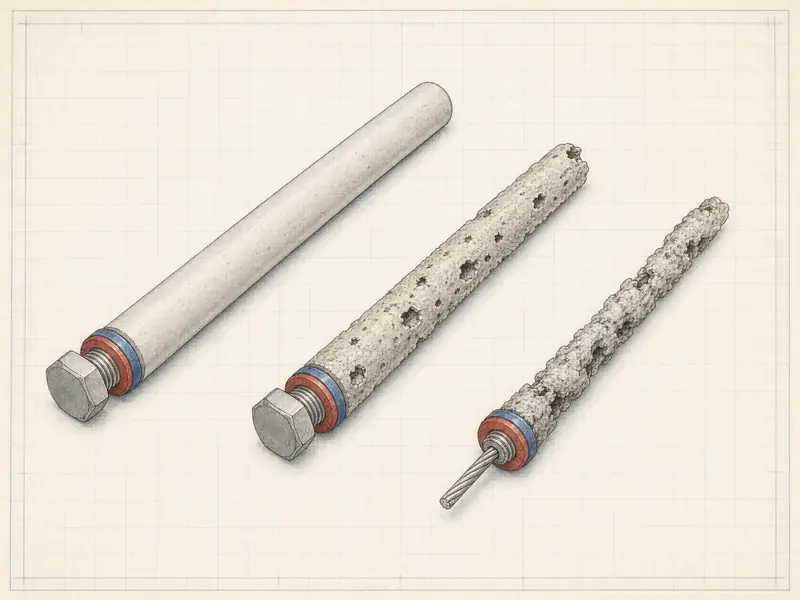
Care changes those numbers. Tanks need yearly draining and anode checks; tankless units need yearly descaling in hard-water areas; heat pump models need filter cleaning. The lifespan and replacement cost guide lists the warning signs.
What changes for water heaters in 2029?
Electric tanks built on or after May 6, 2029 in the 20–120 gallon range need heat-pump-level ratings, and gas tanks a moderately higher floor. The eCFR lists UEF 2.30 up to 55 gallons and 2.50 above that; electric tanks of 20 to 35 gallons whose first-hour rating is under 51 keep the old level. Gas tanks can meet their new level without condensing technology.
Gas tankless units are unchanged at 0.81 UEF: Congress disapproved DOE's condensing-level tankless rule, and DOE withdrew it on May 20, 2025. Nothing changes for heaters already in homes, and as of October 2026 the Federal Register showed no notice postponing or undoing the May 2024 standards. The 2029 rules guide has the detail.
How do you pick between them?
Pick by fuel, space and peak demand first, then by efficiency and cost. For a tank, add up the busiest hour with DOE's worksheet values, such as 20 gallons per shower and 25 per top-loading wash, and choose a first-hour rating no lower than that total. For tankless, total the flow of every fixture likely to run at once and check it against the unit's output at your inlet-to-outlet temperature rise.
Then check the site: a heat pump model needs about 700 cubic feet of air or a louvered space and a condensate drain, while a gas tankless unit needs a sized gas line and its own vent. A permit is commonly required, and gas, venting and 240 V wiring are work for licensed trades. The buying section covers sizing, efficiency, costs and code.
How do you keep a water heater running well?
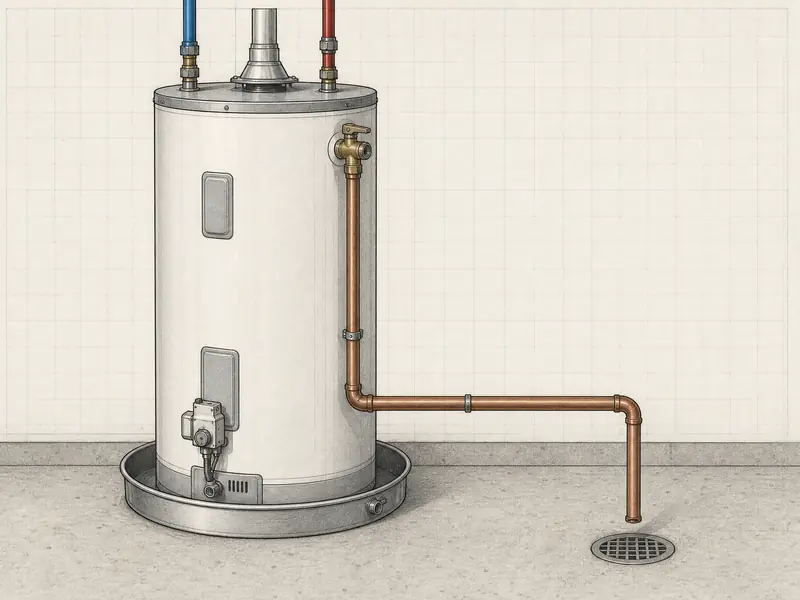
Set it to 120°F, flush it on the maker's schedule and test the relief valve every year. CPSC's scald data show why the setting matters: adults can suffer third-degree burns in 2 seconds at 150°F but about 5 minutes at 120°F. A. O. Smith asks for a full drain and flush of a tank at least annually. Hard water speeds up scale in every type, so a hardness test is worth doing.
When something goes wrong, the cause is usually traceable: no hot water, leaks, noises and a rotten-egg smell each have a short list of likely sources. The care section covers routine maintenance and the fix section covers troubleshooting, including when to call a licensed plumber.
Sources and scope
This overview rests on Wayback Machine copies of DOE's retired Energy Saver pages, ENERGY STAR's product, savings and criteria pages, DOE's 2024 standards and the 2025 tankless withdrawal as printed in the Federal Register, 10 CFR 430.32, the FTC EnergyGuide ranges, EIA prices, IRS guidance, CPSC and A. O. Smith manuals, all checked October 2026. It leaves out contractor quotes, forum anecdotes and brand rankings.
Frequently asked
What is the most common type of water heater in US homes?
The storage tank, gas or electric. Those two tank types together account for over four in five home water heaters, by ENERGY STAR's count.
Which type of water heater is cheapest to run?
Usually a heat pump model or efficient gas equipment, depending on local energy prices. For a family of four, ENERGY STAR's table credits a certified heat pump model with roughly $550 a year in savings over plain resistance heating.
What is a hybrid water heater?
Another name for a heat pump water heater. ENERGY STAR explains the name comes from its automatic switch to electric resistance heat during high demand.
Are gas water heaters going away?
No. The 2029 federal rule raises gas tank minimums moderately and leaves gas tankless units at 0.81 UEF. Local or state rules can differ, so check before replacing.
Is there still a federal tax credit for a new water heater?
Not for 2026 installs. IRS guidance shut off 25C for equipment put in service from 2026 on, and 25D no longer covers solar water heating spending made in 2026 or later. State HEEHR rebates may apply where launched.
What thermostat setting suits most homes?
120°F for most homes, per DOE and CPSC. CDC notes hotter settings of 130–140°F kill more germs but raise scald risk, so use a thermostatic mixing valve if you go higher.
Does Tank & Tankless sell or install water heaters?
No. Tank & Tankless compares water heater types from published federal data and maker manuals; it does not sell, install or repair water heaters and is not tied to any water heater maker.