
Section · Compare
Compare Water Heaters, Head to Head
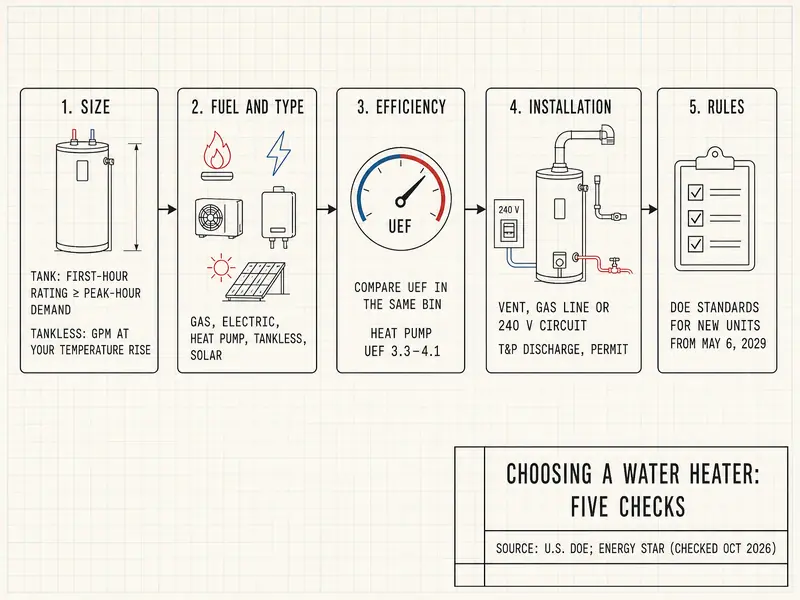
To compare water heaters fairly, line up four published numbers: UEF for efficiency, first-hour rating or GPM for output, expected lifespan, and installed cost from federal estimates.
Compiled by the Tank & Tankless desk · Revised
At a glance
- DOE (Energy Saver, archived) found tankless units 24–34% more efficient than tanks in homes using 41 gallons a day or less.
- A heat pump water heater is two to three times as efficient as a standard electric tank, per DOE; certified models rate UEF 3.3–4.1 on ENERGY STAR's scale.
- UEF only compares heaters within the same usage bin, and DOE warns it does not settle cost comparisons across fuels.
- EIA's August 2026 residential electricity price was 18.16¢/kWh; 2025 natural gas averaged about $1.48 per therm (derived).
- From May 6, 2029, most new 20–120 gallon electric tanks must reach heat pump efficiency; gas tankless stays at 0.81 UEF after the condensing rule was withdrawn.
- May 6, 2029Compliance date for the new consumer water heater standards10 CFR 430.32
- 24–34%Efficiency edge of tankless for light users (41 gal/day or less)DOE Energy Saver (archived)
- 2–3×Heat pump efficiency vs a standard electric tankDOE Energy Saver (archived)
- 18%Portion of household energy spent heating waterDOE Energy Saver (archived)
How should you compare water heaters?
Compare them on the same four specs every time: rated efficiency, hot water output, lifespan and installed cost. DOE's cost and efficiency page (Energy Saver, archived) defines efficiency by the uniform energy factor, or UEF, and notes that a UEF can only be compared against heaters in the same usage bin. A tank's output is its first-hour rating in gallons; a tankless unit's output is gallons per minute at a stated temperature rise.
Each head-to-head below uses those specs from DOE, ENERGY STAR, the Federal Register and maker manuals, never a brand ranking. Start with the pair that matches the choice in front of you.
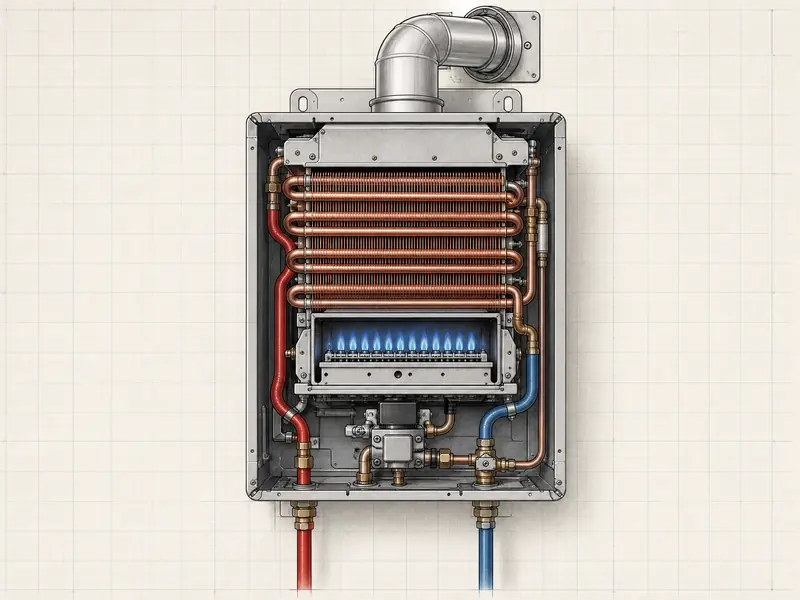 CompareTankless or tank: efficiency, flow, cost
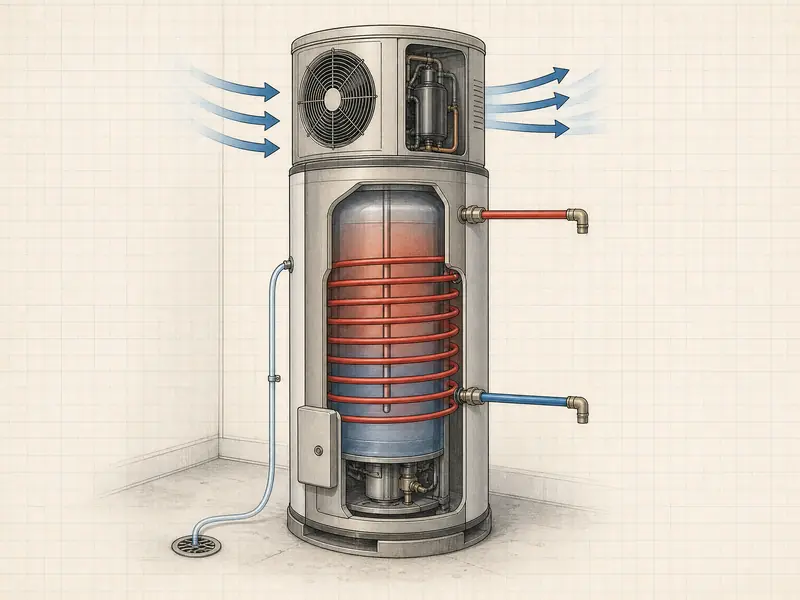 CompareHeat pump or tankless: fuel, space, climate
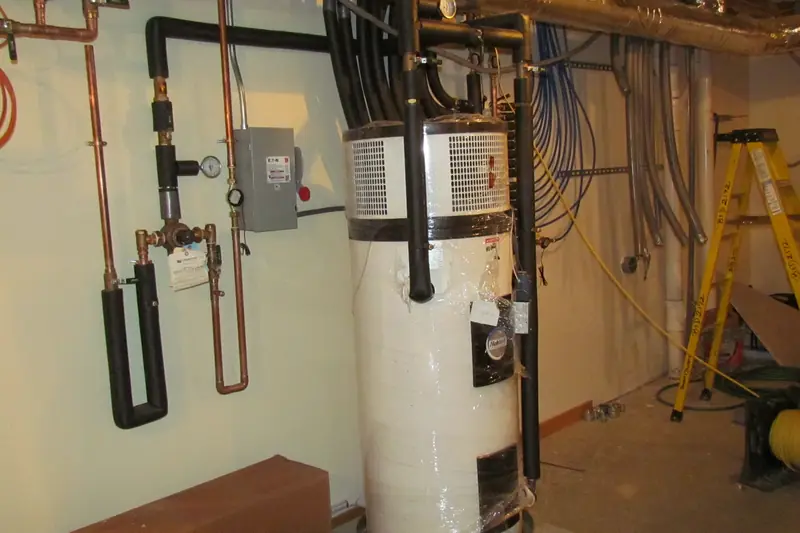 CompareHeat pump or standard electric tank
 CompareGas or electric: running cost and hookups
 CompareCondensing or non-condensing tankless
Which comparison fits your fuel?
Your fuel supply narrows the field first: gas homes weigh gas tanks against gas tankless units, and all-electric homes weigh standard tanks against heat pump models. ENERGY STAR reports that more than 80 percent of installed water heaters are either standard electric tanks or gas tanks, so most buyers start from one of those two.
Switching fuels is possible but adds work: a new 240 V circuit for electric, or a gas line and vent for gas. The gas-vs-electric page prices both fuels from EIA's August 2026 electricity data and 2025 gas averages.
Where does tankless win or lose?
Tankless wins on standby loss and lifespan and loses on simultaneous flow and install cost. DOE puts its efficiency edge at 24–34% for light users and 8–14% near 86 gallons a day, and its life at about 20 years against 10–15 for a tank. DOE also notes a shower and dishwasher running together can push a tankless unit to its limit.
Within tankless, the condensing question decides vent material and whether a drain is needed. ENERGY STAR credits a certified condensing unit with 9 percent less energy use than a conventional one.
Where does a heat pump water heater fit?
A heat pump model fits electric homes with a roomy, mild space for it, and it is where federal rules are steering electric tanks. ENERGY STAR's savings table shows about $550 a year saved for a household of four against a standard electric tank. Under the May 2024 DOE rule, most new electric tanks of 20–55 gallons must reach UEF 2.30 from May 6, 2029.
Its limits are space and cold: most 240 V models want about 700 cubic feet of air and fall back on resistance heat in the mid-30s °F.
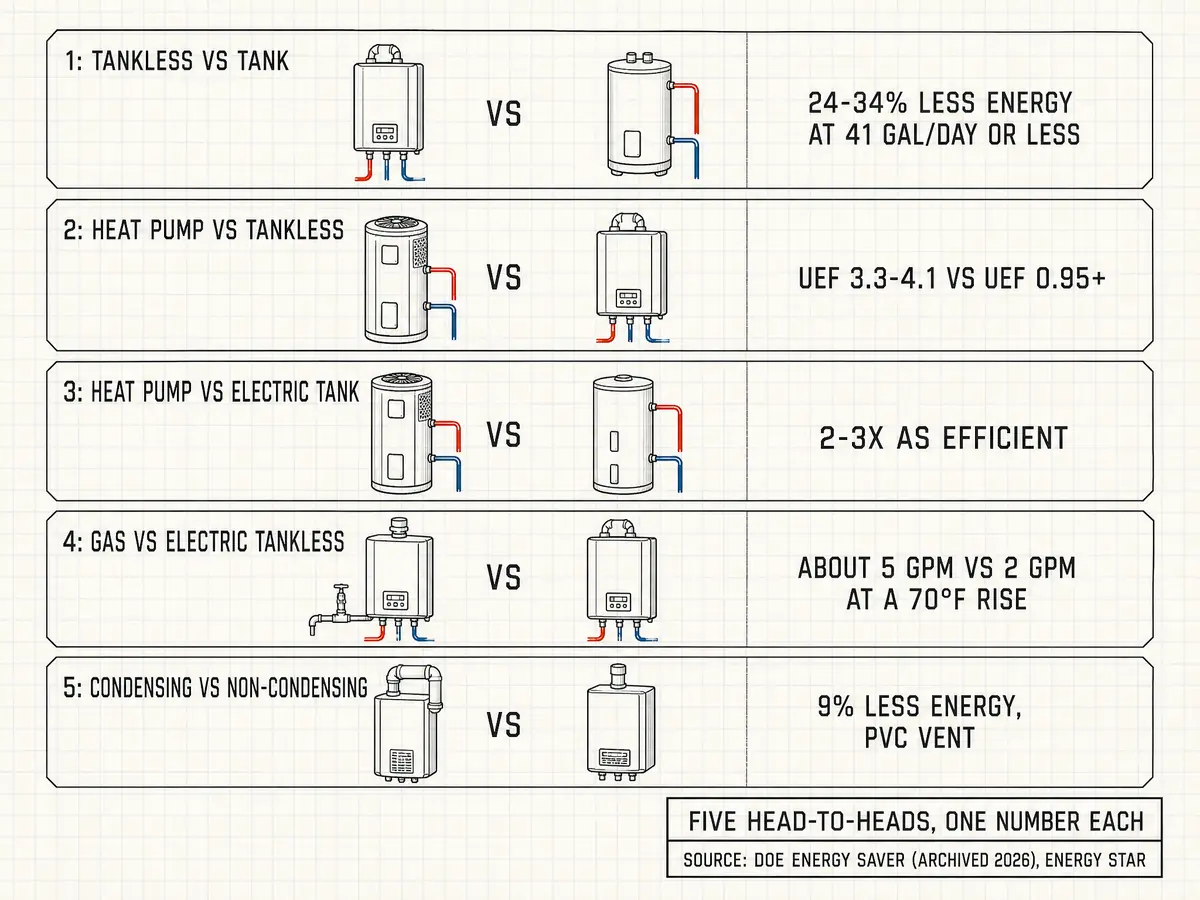
| Matchup | Key figure | What usually decides it |
|---|---|---|
| Tankless vs tank | 24–34% less energy at 41 gal/day or less | Simultaneous demand and install cost |
| Heat pump vs tankless | UEF 3.3–4.1 vs 0.95+ | Fuel price and available space |
| Heat pump vs electric tank | 2–3× as efficient | Room volume and household size |
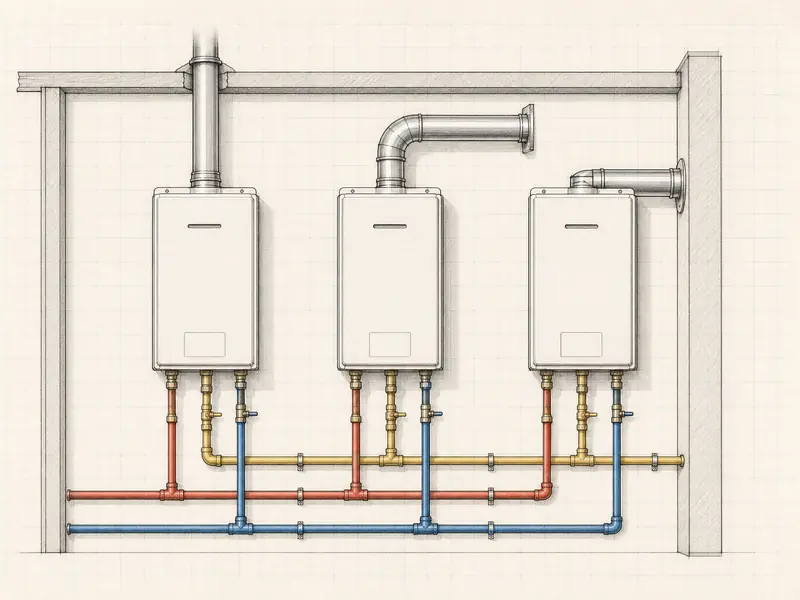
| Gas vs electric | About 5 GPM vs 2 GPM tankless at a 70°F rise | Local energy prices and existing hookups |
| Condensing vs non-condensing | 9% less energy | Vent route and drain access |
Which specs matter most when you compare water heaters?
Output matters most, because an undersized heater fails every day no matter how efficient it is. Size a tank so its first-hour rating at least matches your household's peak hour, and size a tankless unit for the GPM of fixtures that run together at your groundwater temperature. The buying section walks through both methods.
Efficiency comes second, read alongside local energy prices. Lifespan and warranty come third: DOE gives tanks 10–15 years and tankless units about 20, and ENERGY STAR cites 13–15 for heat pump models.
What should you check before you compare water heaters on price?
Check what the install will need beyond the heater itself. Before a tankless purchase, ENERGY STAR wants the installer to confirm gas supply, an outlet for the fan and a workable exhaust path, and heat pump models need a condensate drain. A permit is commonly required; rules are local, so ask the installer what the jurisdiction asks for.
Check incentives too, because they changed in 2026. IRS guidance ends the 25C credit for equipment put into service from January 1, 2026 onward; state HEEHR rebates and utility programs may still apply.
Sources and scope
The comparisons in this section rely on DOE Energy Saver pages (archived 2026 copies), ENERGY STAR product, savings and specification pages, the Federal Register rules of 2024 and the 2025 withdrawal, 10 CFR 430.32, EIA energy prices, IRS guidance and maker manuals, all checked October 2026. Not included: price quotes from contractors, anecdotes from forums and any ranking of brands or models.
Frequently asked
Which water heater type has the highest efficiency rating?
The heat pump type: ENERGY STAR certified models rate UEF 3.3–4.1, against 0.95 or more for the best gas tankless units. The bill is a separate matter, set by what power and gas cost where you live.
What is the cheapest water heater to install?
Usually a like-for-like tank replacement. DOE's 2024 rulemaking modeled an average installed gas tank at $1,578, below its averages for gas tankless units and heat-pump-level electric tanks.
Can UEF ratings be compared between gas and electric heaters?
Only with care. DOE says higher UEF values do not always mean lower annual costs across fuels, so convert both to cost using local energy prices.
Which water heater type lasts the longest?
Tankless, at about 20 years by DOE and ENERGY STAR figures. Heat pump models are cited at 13–15 years and storage tanks at 10–15.
Does the 2029 DOE rule change which comparison matters?
For electric homes, yes: most new standard electric tanks must reach heat pump efficiency from May 6, 2029. Gas tanks face a moderate increase, and gas tankless units keep the 0.81 minimum.
Where do solar and point-of-use heaters fit?
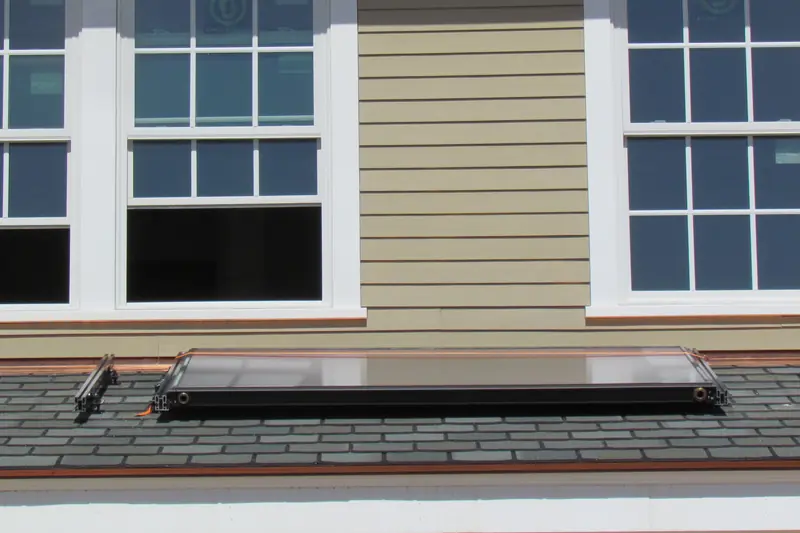
They are covered in the other-types section rather than here. ENERGY STAR says solar systems need a backup heater and point-of-use units suit low use, under about 20 gallons a day.
Start over at types of water heaters compared