
Section · Buying
Choosing a Water Heater
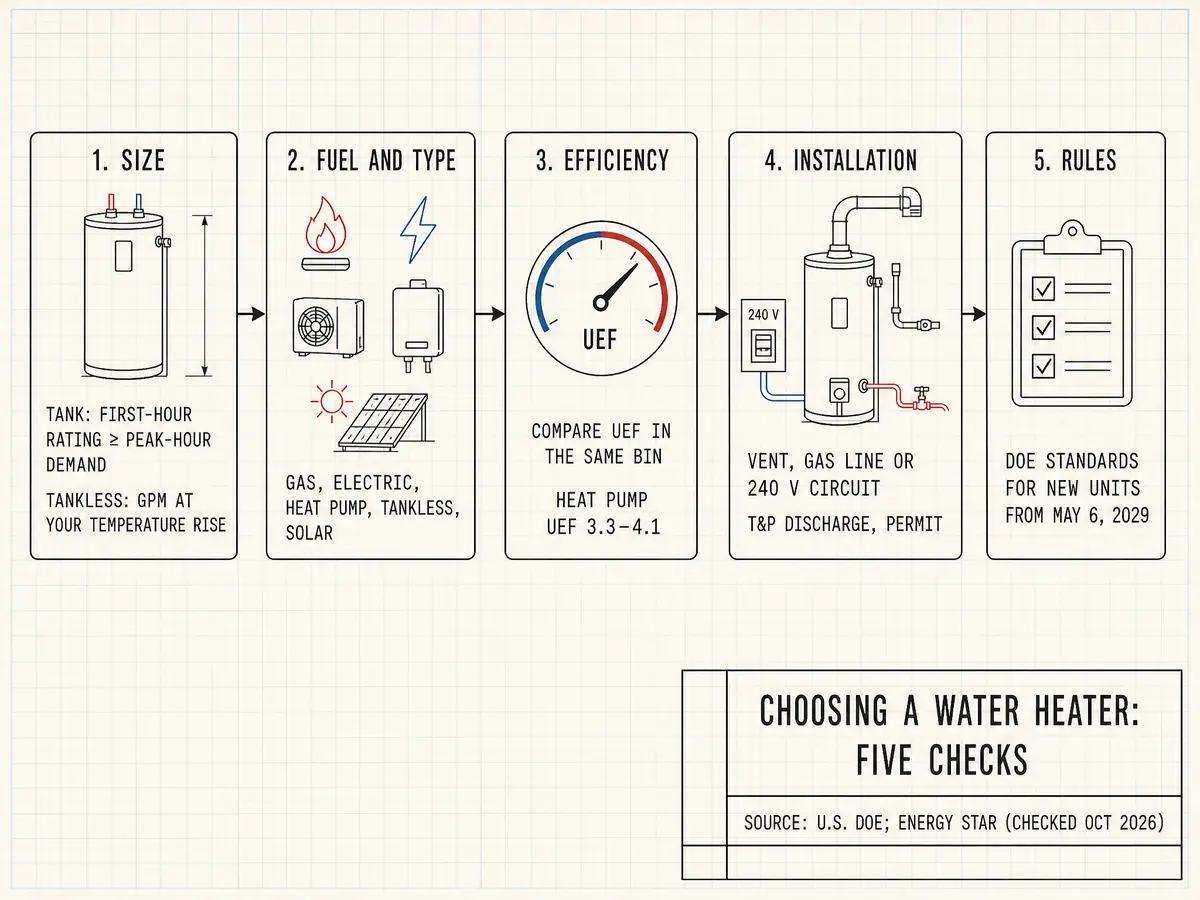
Choosing a water heater comes down to five checks: size it for your busiest hour, pick a fuel and type, compare UEF and yearly cost, plan the installation, and know the federal rules for 2029.
Compiled by the Tank & Tankless desk · Revised
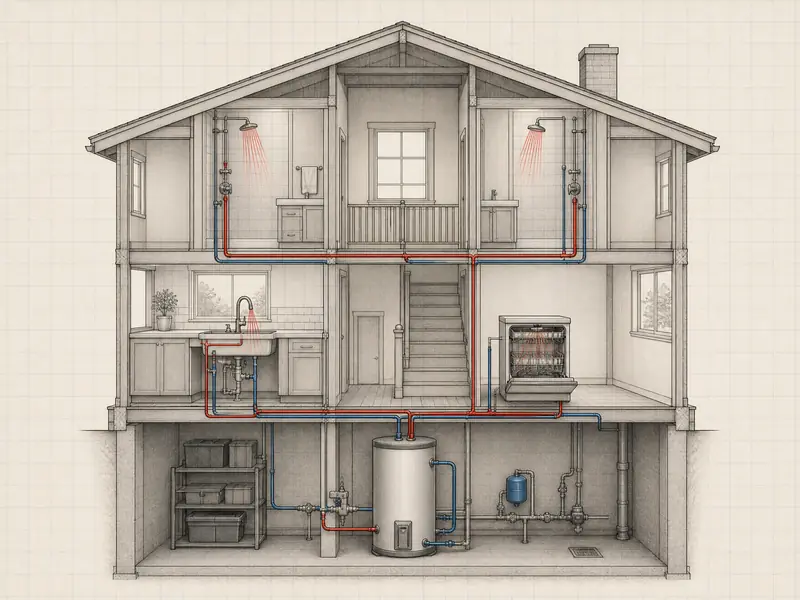
At a glance
- Tanks are matched to demand by first-hour rating and a tankless unit by GPM at your temperature rise, per DOE Energy Saver (archived).
- Water heating is about 18% of a home's energy use, per DOE.
- ENERGY STAR heat pump models rate UEF 3.3–4.1, against roughly 0.63–0.95 for conventional heaters (ENERGY STAR).
- Tanks last 10–15 years, heat pumps 13–15 and tankless units about 20, per DOE and ENERGY STAR.
- New federal minimums apply to units made from May 6, 2029; the gas tankless rule was withdrawn in May 2025 (Federal Register).
- The federal 25C credit no longer applies to water heaters installed after 2025 (IRS).
How do you start choosing a water heater?
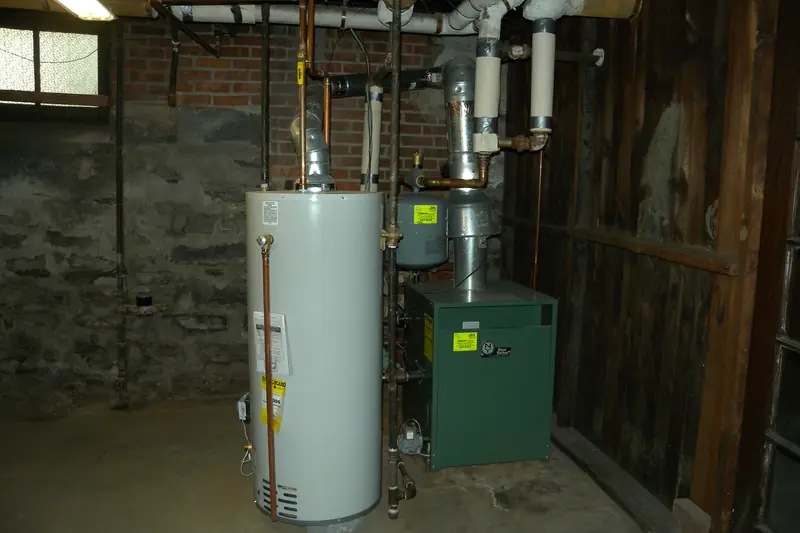
Start by checking what you have now: fuel, size, age and where it sits. ENERGY STAR notes that a 3- to 4-inch flue pipe on top usually means a gas or propane tank, and that more than 80% of homes have either a standard electric tank or a gas tank. Then work through the five checks below in order, because each narrows the next.
| Type | Sized by | Typical rated UEF | Typical lifespan |
|---|---|---|---|
| Gas storage tank | First-hour rating | ≈0.56 federal minimum at 50 gal; 0.81+ ENERGY STAR | 10–15 years |
| Electric storage tank | First-hour rating | About 0.93 | 10–15 years |
| Heat pump (hybrid) tank | First-hour rating | 3.3–4.1 ENERGY STAR | 13–15 years |
| Gas tankless | GPM at temperature rise | 0.81 minimum; 0.95+ ENERGY STAR | About 20 years |
To compare the types head to head, see tankless vs tank, gas vs electric and the heat pump overview.
- 18%Share of home energy used for water heatingDOE Energy Saver (archived)
- 80%+Homes with a standard electric or gas storage tankENERGY STAR
- $95/yrYearly gas bill cut, certified tankless over a basic gas tank (four people)ENERGY STAR
- May 6, 2029Units built from this date must meet the new UEF floorsFederal Register
What size water heater should you choose?
Pick a tank rated to deliver, in its first hour, at least what your household draws in its busiest hour, and a tankless unit that delivers your simultaneous flow at your temperature rise; DOE's worksheet counts 20 gallons per shower. For tankless sizing, DOE assumes 50°F inlet water and a 120°F target, a 70°F rise, at which gas units typically give about 5 GPM and electric ones about 2.
How do efficiency ratings help in choosing?
Efficiency ratings show how much energy a heater needs for the same hot water, but UEF can only be compared within the same draw bin and the same fuel. In ENERGY STAR's figures, four people switching from a resistance tank to a heat pump cut about $550 from the yearly bill (priced at $0.146/kWh), while a certified gas tank trims about $25 a year compared with a basic one.
What installation questions come with choosing a water heater?
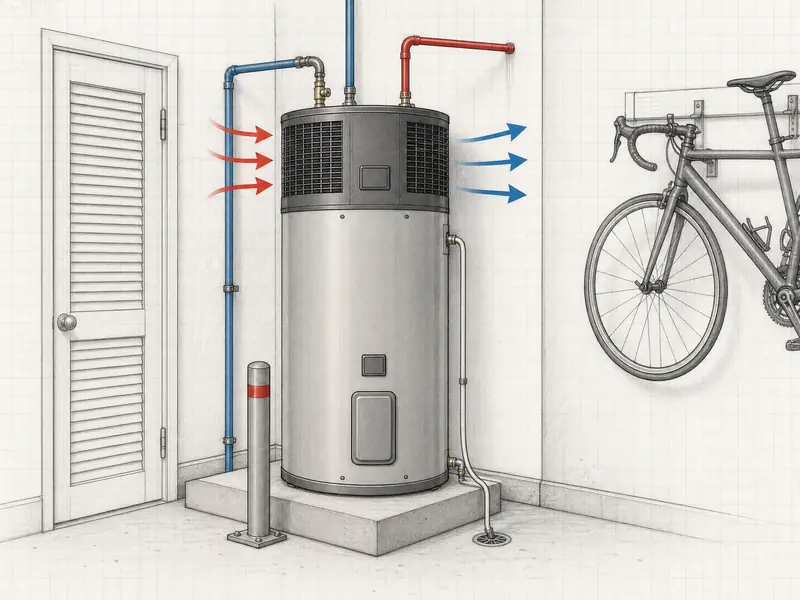
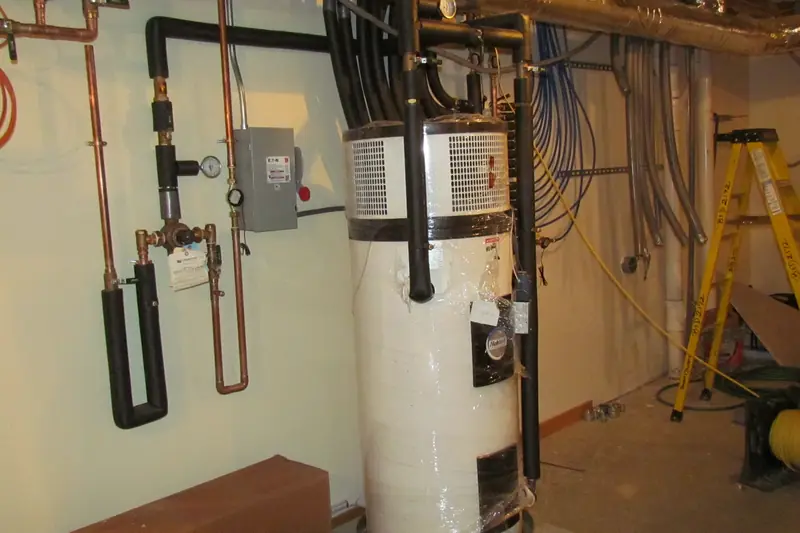
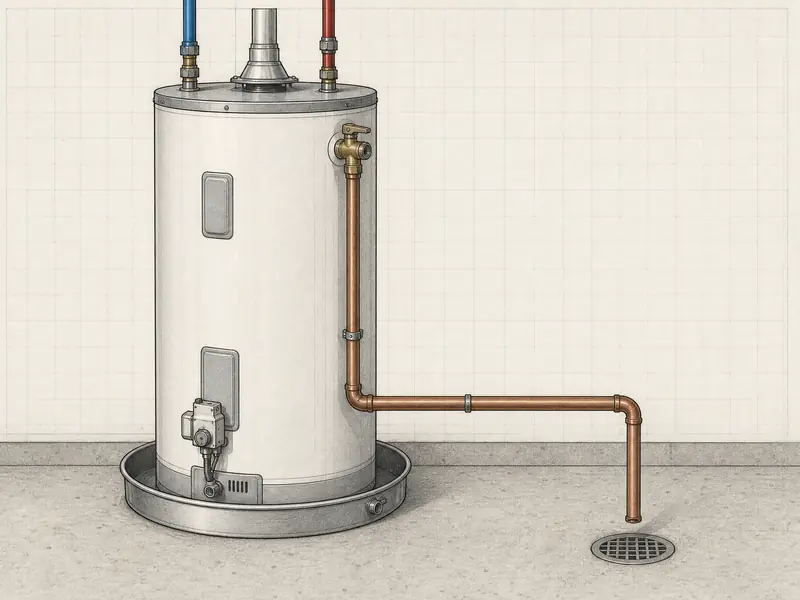
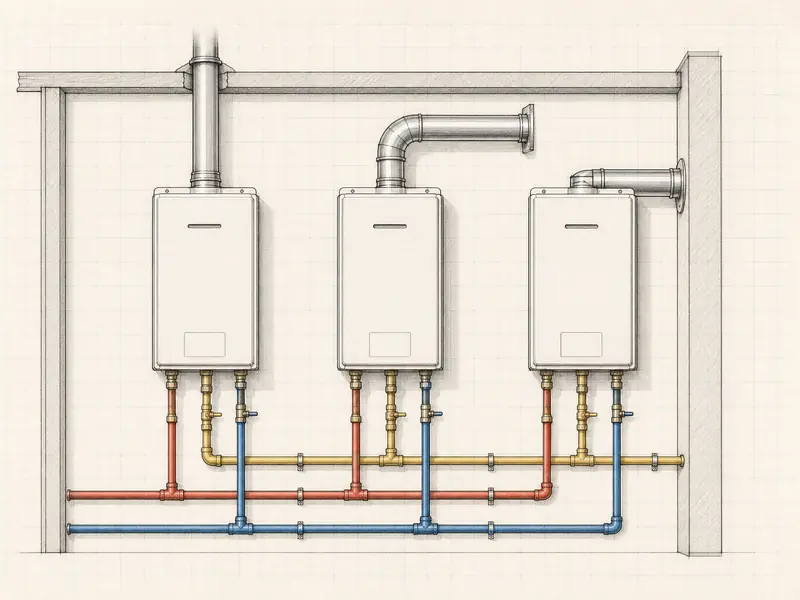
The main installation questions are venting, gas line or circuit size, space, and the safety items code requires, such as the T&P discharge pipe and, in many places, a permit. ENERGY STAR says the installer should check whether the existing gas line is sufficient, whether power is available near a tankless unit and how it will vent; heat pump models typically need about 700 cubic feet of air or louvers and a condensate drain (ENERGY STAR install guide).

Which rules affect choosing a water heater now?
Two federal changes matter: new efficiency minimums for units made from May 6, 2029, and the end of the 25C tax credit after 2025. Electric tanks from 20 to 120 gallons built after that date will mostly need heat pump efficiency, small 20–35 gallon electric tanks are excluded, gas tanks get a modest increase without a condensing requirement, and heaters already installed are not affected. Nothing delaying or repealing the 2024 standards had been published as of October 2026.
Sources and scope
This hub summarizes the six Buying guides and the sources they cite: DOE's archived Energy Saver pages (2026 snapshots), ENERGY STAR criteria and articles, the Federal Register and eCFR for federal standards, and IRS guidance on 25C (all checked October 2026). Left out: brand rankings, contractor price quotes and "best water heater" lists, since this site compares types on published specs rather than rating products.
Frequently asked
What is the most efficient type of water heater?
By rated UEF, heat pump water heaters: ENERGY STAR models rate 3.3–4.1, while conventional gas and electric units rate below 1.0. Running cost still depends on local electricity and gas prices.
Is tankless or tank better for a family of four?
It depends on how many fixtures run at once. A tankless unit must cover simultaneous flow at your temperature rise; a tank must have a first-hour rating that covers the busiest hour. The sizing guides show both methods.
Can a heat pump model take the place of a gas tank?
Often, if there is enough air space, a condensate drain and power. ENERGY STAR suggests sizing up one tank size for a 240 V model and typically two sizes for a 120 V plug-in model.
Is there a federal tax credit for water heaters in 2026?
No. 25C was cut off after the 2025 tax year by the July 2025 tax law. Where states have launched HEEHR, or a utility runs a program, rebates can still help.
Will the 2029 rule force a replacement of a working water heater?
No. It covers new units manufactured from May 6, 2029. Existing heaters can stay in service and be repaired.
How often should a water heater be replaced?
When it nears the end of its life: DOE gives 10–15 years for tanks, and ENERGY STAR suggests planning ahead once a unit passes 10 years.
Start over at the water heater type index