
Care
Water Heater Anode Rods
A water heater anode rod is a sacrificial metal rod that corrodes so the steel tank doesn't; check it at six months to three years per the manual, then yearly, and replace it once spent.
Compiled by the Tank & Tankless desk · Revised
On this page
At a glance
- A. O. Smith's electric instructions say to inspect the anode within three years at most, then every year.
- With artificially softened water, the same document says the rod should be inspected annually.
- A rod is spent when most of it is thinner than 3/8 inch or about a third of its core wire shows (A. O. Smith).
- Penn State Extension says swapping a magnesium rod for aluminum should stop a rotten-egg odor while keeping corrosion protection.
- Removing the anode for good voids the warranty, per A. O. Smith's gas Use & Care Guide.
- DOE Energy Saver (archived) suggested an anode inspection every 3 to 4 years; maker manuals ask for more frequent checks.
- 3 yrsLatest first anode inspection on an A. O. Smith electric tankA. O. Smith
- 3/8 inRod diameter below which most of the rod counts as depletedA. O. Smith
- 1-1/16 inSocket size A. O. Smith lists for its gas-tank anodeA. O. Smith
- ½Share of original diameter lost that calls for replacementBradford White
What does a water heater anode rod do?
A water heater anode rod protects the steel tank by corroding in its place. A. O. Smith's electric instructions describe it as slowly depleting while it shields the glass-lined tank, and warn that once it is gone the tank starts to corrode and will eventually leak.
The rod hangs from the top of the tank, usually under a hex head, and runs most of the tank's height. It is a consumable part. A. O. Smith's gas guide says anode rods are not covered under its warranty, so replacing one is an owner cost. That is also why the inspection schedule matters: a spent rod leaves the tank lining as the only defense, and DOE puts storage tank life at about 10 to 15 years even with normal care.
The rod is also behind the most common odor complaint. Its reaction with certain water can produce hydrogen sulfide, which smells like rotten eggs. The rotten-egg smell guide walks through how to tell an anode problem from a well-water problem.
Magnesium, aluminum or zinc anode rod?
Magnesium is the standard anode rod, while aluminum or a zinc blend is the usual swap when the hot water smells. Penn State Extension notes that water heaters are fitted with a magnesium rod to inhibit corrosion, and that the magnesium can chemically reduce sulfates in the water to hydrogen sulfide.
| Material | Where it's used | What sources say |
|---|---|---|
| Magnesium | Standard factory rod | Can turn sulfates into hydrogen sulfide in some water (Penn State Extension) |
| Aluminum | Replacement for odor | Should end the odor while keeping corrosion protection (Penn State Extension) |
| Zinc (special anode) | Maker's odor part | May reduce or eliminate the odor (A. O. Smith) |
| None | Never | Removal voids the warranty and speeds tank corrosion (A. O. Smith, Penn State) |
Order the replacement through the tank's maker when you can. A. O. Smith's electric instructions say its parts list includes a special anode for odor or discoloration, and they add that the rod may reduce but not eliminate odor. Powered (impressed-current) anodes are sold as another option; no maker manual covering them was reviewed for this page, so check your heater's warranty before fitting one.
When should you check the anode rod?
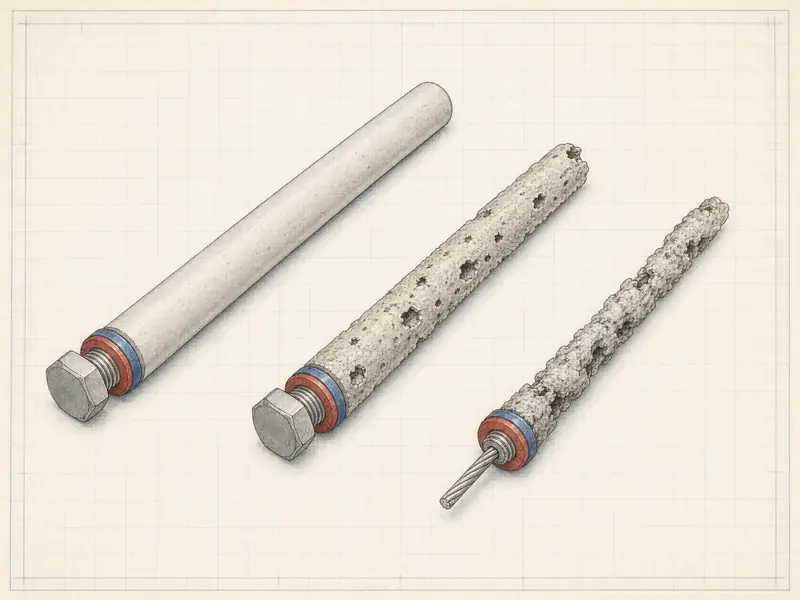
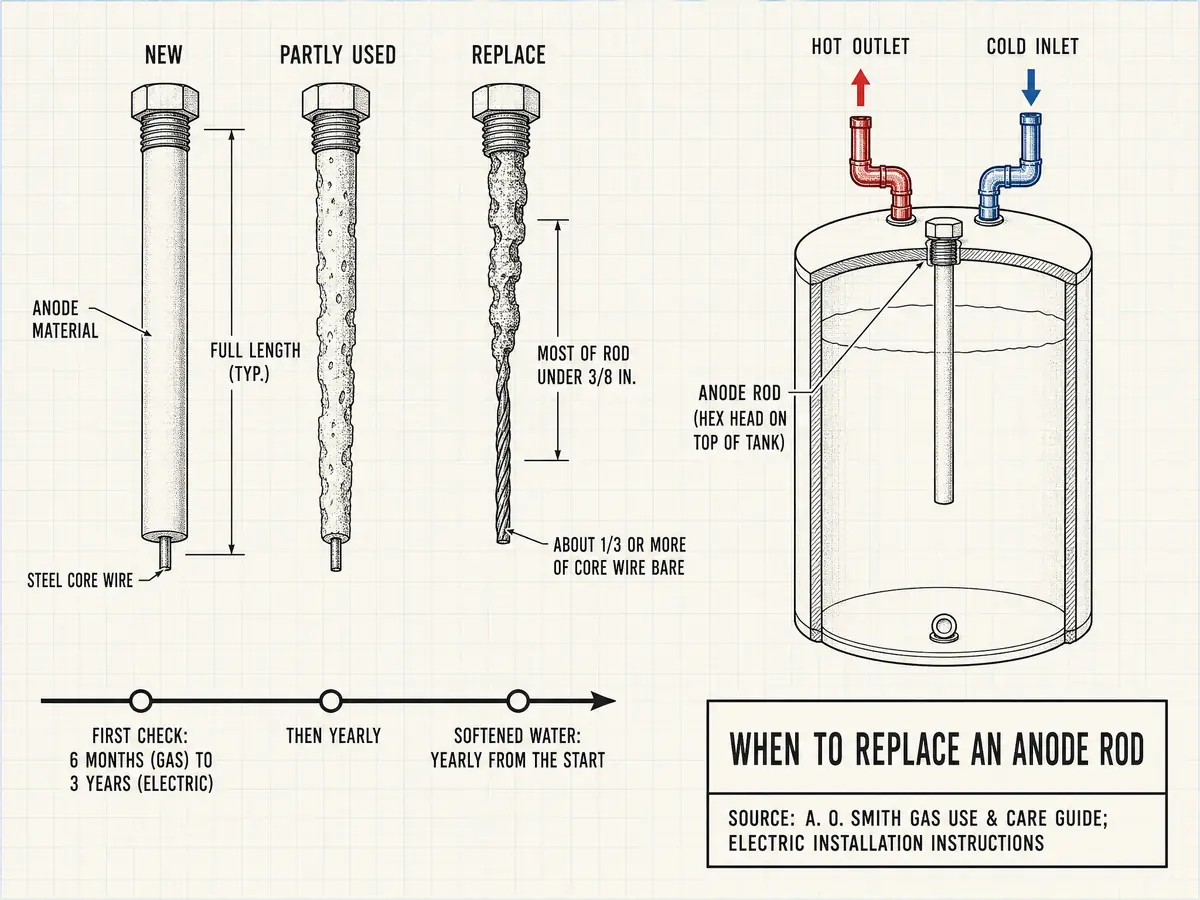
Check the anode rod after six months to three years, depending on the manual, then once a year until it needs replacing; with softened water, check it yearly from the start. Makers set the first check differently, so start with your heater's manual.
A. O. Smith's gas guide pairs the first check with the first drain and flush at six months, then asks for a look at least annually. Its electric instructions allow up to three years for the first inspection, then yearly. DOE's Energy Saver page on storage heaters, now archived, listed a much looser routine of every three to four years. Following the maker protects both the tank and the warranty.
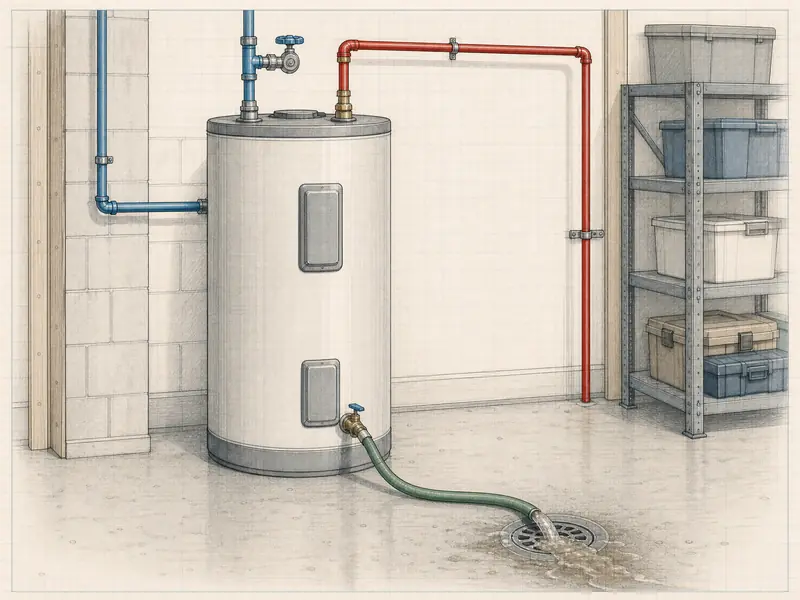
Doing the check during a water heater flush saves work, since the tank is already cool and partly drained. Both jobs belong on the yearly list in the water heater maintenance schedule.
How do you know an anode rod needs replacing?
An anode rod needs replacing when it has worn thin or its steel core shows. A. O. Smith's electric instructions give two signs: most of the rod's diameter is under 3/8 inch, or roughly a third or more of the rod's length shows bare support wire. Either one means replace it.
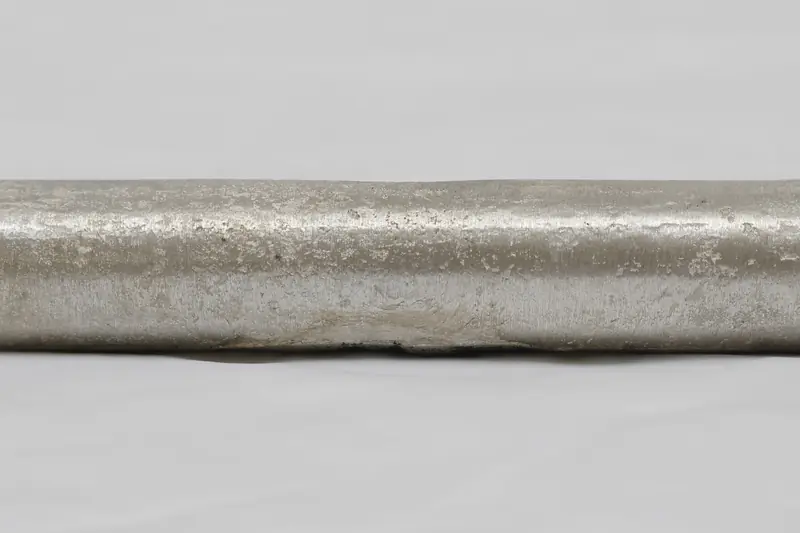
Bradford White's rule in a power-vent service manual is similar. It recommends replacement once the rod has lost half its original diameter, about 3/4 inch on that model, or as soon as any steel core is exposed. A new rod looks like a smooth, even cylinder; a partly used one is pitted and lumpy; a spent one is thin and patchy with wire between the lumps.
You can't judge the rod from outside the tank, but some signs suggest checking it. A sudden rotten-egg odor in the hot water only is one. Rust-tinted hot water can be another, though it can also come from pipes. Small drips near the top fittings call for a look as well, and water heater leaks has a guide to tracing them.
Does softened water wear out the anode rod faster?
Yes, softened water wears out the anode rod faster. A. O. Smith's gas guide says plainly that a water softener makes the rod deplete faster than normal and asks for more frequent checks.
Its electric instructions explain why: softening swaps calcium and magnesium for sodium ions, which makes the water more corrosive, and the maker says a softener may shorten tank life. On those models, softened water moves the anode check to every year from the start. Penn State Extension adds that in rare cases a softener can also contribute to hydrogen sulfide odor.
None of this means a softener is wrong for the house. It removes the hardness that leaves sediment in tanks and scale in tankless units. It just changes the maintenance plan: test the anode yearly. The softener and water heater guide compares the trade-offs.
How is an anode rod replaced?
An anode rod is replaced by shutting off the heat and water, relieving pressure, draining a few gallons, unscrewing the old rod and threading in a new one with sealant. A. O. Smith's electric instructions list the steps:
- Turn off power to the water heater (or set a gas control to OFF).
- Shut off the water supply and open a nearby hot faucet to depressurize the tank.
- Drain about 5 gallons through the drain valve, then close it.
- Remove the old anode rod.
- Wrap the new rod's threads with PTFE tape or approved pipe sealant and install it.
- Turn the water back on, open a hot faucet to purge air, and check for leaks.
- Restart the heater per the manual, with the tank completely full.
The hex head is often seized after years in place, and it needs a large socket and steady leverage; A. O. Smith lists a 1-1/16 inch socket for its gas tanks. Overhead clearance can also limit how long a rod fits. If the head won't turn or the tank sits in a tight closet, a licensed plumber can do it, often alongside the yearly flush.
Sources and scope
Sources for this page: A. O. Smith's residential electric installation instructions and its residential gas Use & Care Guide (June 2023), a Bradford White power-vent service manual, Penn State Extension's page on hydrogen sulfide in wells, and the archived DOE Energy Saver storage heater page, all opened in October 2026. Brand rankings of aftermarket rods, contractor prices, video tips and forum claims were left out. Powered anodes are mentioned but not assessed, because no maker manual covering them was reviewed.
Frequently asked
How long does a magnesium anode rod last?
It depends on the water. A. O. Smith schedules the first check within three years and yearly after that because wear rates vary, and softened water speeds it up.
Will replacing an anode rod get rid of the smell?
Often, when the odor is only in the hot water. Penn State Extension says an aluminum rod in place of magnesium should eliminate it; A. O. Smith offers a zinc rod and notes it may reduce rather than end the odor.
What size anode rod does a water heater need?
Match the thread, length and type listed for your model in the maker's parts list. Using the maker's part keeps the warranty terms clear.
Can you just take the anode rod out?
No. A. O. Smith states an anode must be in the tank at all times or the warranty is void, and Penn State Extension warns removal can shorten tank life.
Is zinc or magnesium better for an anode rod?
Magnesium is the standard protective rod. Zinc and aluminum versions are the usual choice when magnesium causes a sulfur odor, per A. O. Smith and Penn State Extension.
Do tankless water heaters have anode rods?
Tankless heaters have no storage tank, so they don't use the sacrificial tank rod described here. Their main care task is descaling the heat exchanger.
Does a heat pump water heater have an anode rod?
Heat pump water heaters store water in a lined steel tank, so they generally do. Check the model's manual for its inspection interval and part number.
Related reading
Start over at every water heater type, side by side · more in Care