
Tankless
Hard Water and Tankless Water Heaters
Hard water and tankless water heaters mix badly above about 12 grains per gallon (200 mg/L), where Rinnai requires treatment and Noritz's warranty stops; below it, yearly descaling and, from about 4 gpg, treated water keep scale in check.
Compiled by the Tank & Tankless desk · Revised
Ownership note. Tank & Tankless has the same owners as SoftPro Water Systems and Quality Water Treatment, two water treatment stores. We link to them only on pages about hard water, scale and well-water odor, and only for products they sell. Figures come from DOE, ENERGY STAR, the Federal Register, IRS, USGS and maker manuals, checked October 2026. Store product descriptions are the store's own claims. Ownership and store links
On this page
- Why is hard water a problem for tankless water heaters?
- How hard is too hard for a tankless water heater?
- Do tankless water heaters need soft water?
- Does a salt-free conditioner protect a tankless unit?
- How often should a tankless unit be descaled on hard water?
- What do tankless warranties say about hard water?
- Frequently asked
At a glance
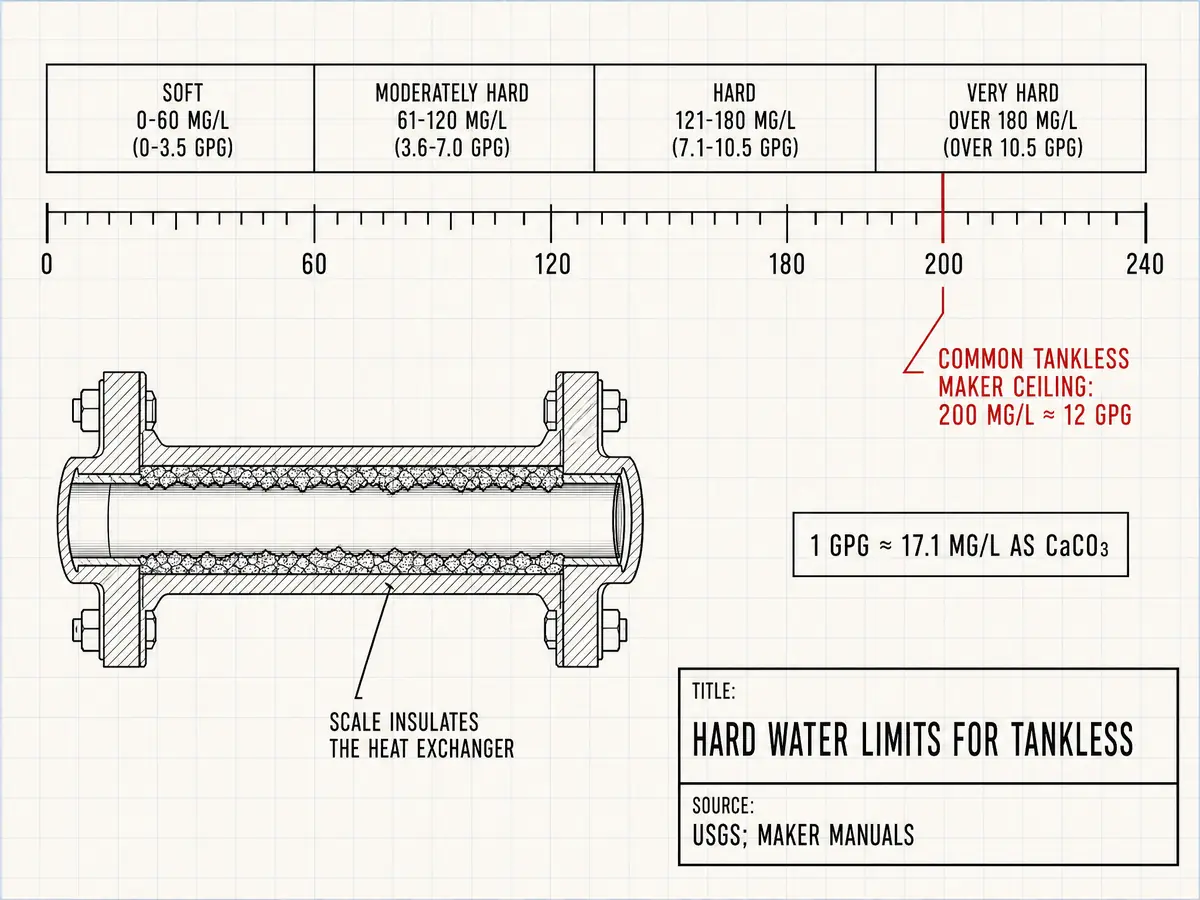
- USGS classes water at 0–60 mg/L as soft, 61–120 as moderately hard, 121–180 as hard and over 180 as very hard; 1 grain per gallon is about 17.1 mg/L.
- Rinnai's SENSEI manual sets a total hardness limit of 200 mg/L and recommends a water softener or the Scale Cutter system Rinnai offers from 61 mg/L (about 4 gpg in its table), strongly from 161 mg/L, and requires one above 200 mg/L.
- Noritz's warranty excludes damage from water harder than 12 grains per gallon (200 mg/L); Navien's excludes hard water deposits and lime build-up.
- Rinnai's schedule is a flush at least yearly, and its manual puts lime and scale damage outside warranty coverage.
- A softener removes calcium and magnesium; a salt-free conditioner does not remove hardness, and the store sells one as scale prevention.
- Tankless units have no anode rod, but softened water wears out the anode in any storage tank in the house faster, per A. O. Smith.
- 200 mg/LRinnai's maximum total hardness for its tankless units (about 12 gpg)Rinnai manual
- 12 gpgHardness above which Noritz's warranty does not cover damageNoritz
- >180 mg/LUSGS threshold for very hard waterUSGS
- At least 1/yrHow often Rinnai says to flush residential tankless unitsRinnai
Why is hard water a problem for tankless water heaters?
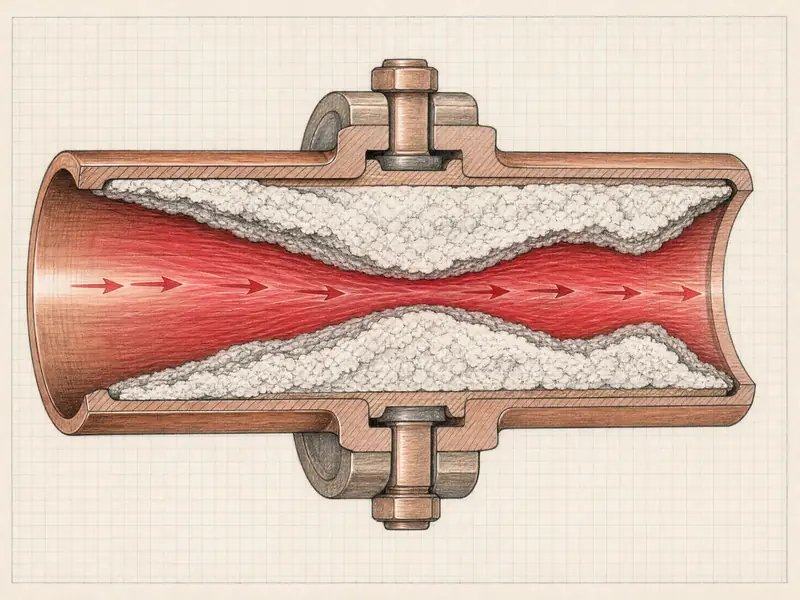
Hard water leaves calcium carbonate scale inside the tankless heat exchanger, and that scale insulates the metal from the water. USGS explains that when hard water is heated, solid deposits of calcium carbonate can form, which can shorten equipment life and raise heating costs. A tankless unit is especially exposed because all of its heating happens in a narrow heat exchanger at high heat output.
American Water Heater's tankless guide describes the effect: scale coating the inside of a heat exchanger pipe "acts as a thermal insulator," and once it forms, the heater "will never return to peak efficiency" even after descaling. No maker or agency publishes a reliable percentage for that loss, so treat any exact figure with suspicion.
Temperature makes it worse. Rinnai's manual says scale build-up can be accelerated if the heater is set to a high temperature. Keeping the set point at 120°F, the setting DOE and the CPSC recommend, also helps the heat exchanger.
How hard is too hard for a tankless water heater?
For most makers, about 12 grains per gallon (200 mg/L) is the ceiling, and treatment is advised well before it. Rinnai lists "Total Hardness Up to 200 mg/L" among its water quality limits and says water beyond them can damage the heater, with repairs not covered by the warranty. Noritz excludes damage from "hardness levels in excess of 12 grains per gallon (200 mg/L)," along with untreated or poorly treated well water.
Note that makers and USGS use different labels. Rinnai's manual calls 61–120 mg/L "slightly hard" and 121–160 mg/L "moderately hard," while USGS calls 61–120 "moderately hard" and 121–180 "hard." Compare numbers, not names.
| Hardness (mg/L as CaCO3) | Grains per gallon | USGS class | Maker guidance |
|---|---|---|---|
| 0–60 | 0–3.5 | Soft | Rinnai ("soft"): no treatment or extra flushing listed |
| 61–120 | 3.6–7.0 | Moderately hard | Rinnai ("slightly hard"): softener or Scale Cutter recommended; flush yearly |
| 121–160 | About 7–9 | Hard | Rinnai ("moderately hard"): softener or Scale Cutter recommended; flush yearly |
| 161–200 | About 9–12 | Hard to very hard | Rinnai ("very hard"): softener or Scale Cutter strongly recommended; flush yearly |
| Over 200 | Over 12 | Very hard | Rinnai ("extremely hard"): softener or Scale Cutter required; Noritz warranty excludes damage |
To find your number, ask your water utility for its annual water quality report or test a sample. If the report gives hardness in mg/L, divide by about 17.1 for grains per gallon.
Do tankless water heaters need soft water?
Not on soft water, but Rinnai recommends treated water from 61 mg/L (about 4 grains per gallon in its table), strongly recommends it from 161 mg/L and requires it above 200 mg/L, and it names a water softener for that. Rinnai says that in an area known for hard water, "the water must be treated and may require a more frequent flushing schedule." In its treatment table, the options it names are a water softener or the Scale Cutter conditioning system that Rinnai itself offers through Southeastern Filtration.
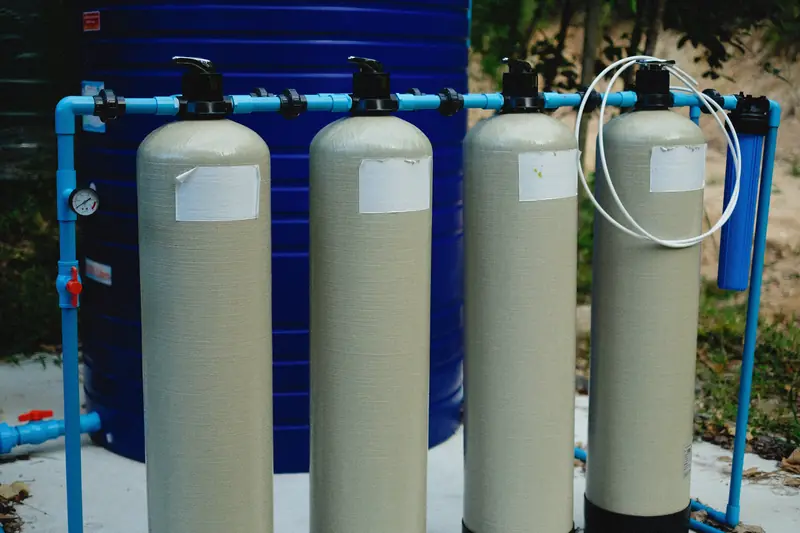
A softener exchanges the calcium and magnesium that make water hard for sodium, which is why it actually lowers the hardness reading. The SoftPro store, which has the same owners as this site, sells the SoftPro ECO City Water Softener for municipal water; its listed price in October 2026 ran from $967 to $2,677 depending on size and options. Test first, and size any softener to your hardness and household flow.
Softened water has one side effect for other heaters in the home. A. O. Smith's electric instructions call artificially softened water "exceedingly corrosive," and its gas Use & Care Guide warns that with a softener "your anode rod will deplete faster than normal," so any tank should have its anode checked yearly. A tankless unit has no anode rod, so this applies to storage tanks, not to the tankless heater itself. The softeners and scale prevention guide covers both types of equipment.
Does a salt-free conditioner protect a tankless unit?
A salt-free conditioner does not remove hardness, and it is not what the tankless makers' manuals name. Rinnai's table names a water softener or the specific Scale Cutter system it offers, not conditioners in general; Noritz's and Navien's warranties speak of hardness levels and hard water deposits. If a conditioner is used instead, read the warranty terms first, because the hardness reading itself will not change.
The SoftPro store sells the SoftPro FORTRESS Salt-Free Water Conditioner (sold by SoftPro Water Systems, same owners as this site) for city water. The store describes it as a system "designed to manage mineral buildup without the use of salt" and as a scale-prevention solution; that is the store's own claim. Its listed price in October 2026 ran from $229 to $1,259 across home, pro and commercial sizes.
Some households prefer a salt-free option. If you choose one, keep descaling on the manual's schedule, since the water will still test hard.
How often should a tankless unit be descaled on hard water?
At least once a year, and more often on hard water. Rinnai's flushing page says to flush mineral deposits "at least once a year," and its manual says hard water "may require a more frequent flushing schedule." The same manual's table lists once a year for residential and twice a year for commercial use in its hardness bands. Navien's controller can show an E760 "flushing/service" alarm when the unit is due.
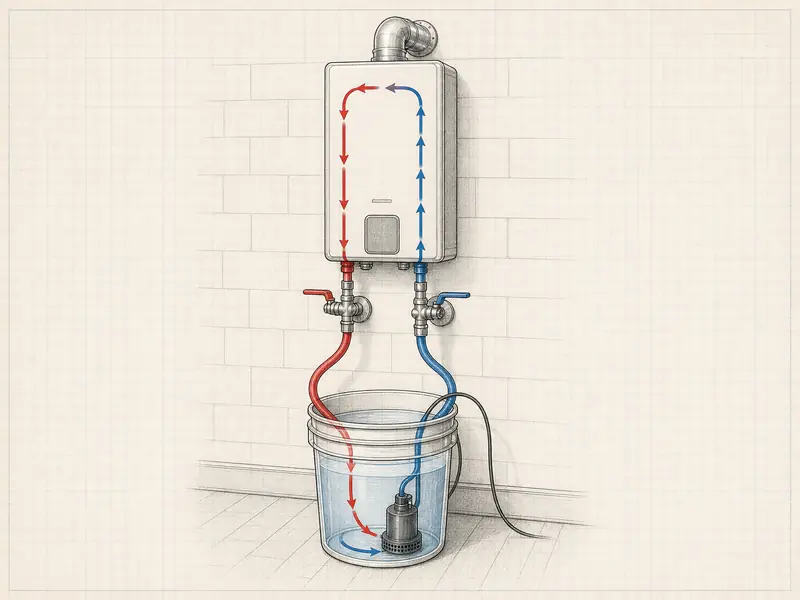
A descale circulates a cleaning solution through the closed-off heat exchanger with a small pump:
- Shut off power and gas, and close the isolation valves.
- Connect hoses and a pump to the service ports with a bucket of solution.
- Circulate for 45–60 minutes: Rinnai's manual asks for at least an hour of undiluted white vinegar at about 4 GPM, while Navien's asks for at least 45 minutes with a diluted cleaning solution.
- Flush with clean water for about five minutes, close the ports and restore service.
Rinnai strongly recommends isolation valves at installation so this job is possible. The tankless descaling guide walks through each step, and the hard water guide for all heaters covers tanks as well.
What do tankless warranties say about hard water?
Most tankless warranties exclude scale damage outright, so hard water is the homeowner's risk to manage. The three makers checked here put it in writing:
- Rinnai: the manual warns that skipping flushes will damage the heat exchanger, and that lime and scale damage falls outside the warranty.
- Noritz: damage from water harder than 12 grains per gallon (200 mg/L), or from untreated or poorly treated well water, is excluded.
- Navien: "hard water deposits, lime or mineral build-up" are listed among excluded local conditions.
Keep a record of your water test and your descaling dates. If you are still choosing a heater, factor treatment and yearly service into the cost; the tankless pros and cons and the tankless vs tank comparison help weigh it.
Sources and scope
Hardness classes are from USGS. Maker limits and procedures come from the Rinnai SENSEI RX manual and flushing page, the Noritz N-0751M-DVC limited warranty, Navien's NPE-A warranty and operation manual, American Water Heater's tankless guide and A. O. Smith's residential manuals, all opened October 2026. Product descriptions and prices are the SoftPro store's own listings as of October 26, 2026. Left out: efficiency-loss percentages for scale (no primary source found), brand rankings and forum anecdotes.
Frequently asked
Can you use a tankless water heater with hard water?
Yes, within the maker's limits and with yearly or more frequent descaling. Rinnai's limit is 200 mg/L total hardness; it recommends treated water from 61 mg/L (about 4 gpg in its table) and requires it above 200 mg/L.
What is the downside of a tankless heater on hard water?
Scale builds in the heat exchanger, cuts heat transfer and can cause failures that warranties exclude. Rinnai's manual says failure to flush will damage the heat exchanger.
Does a softener void a tankless warranty?
The manuals checked here name a water softener as a recommended treatment, so a softener is in line with them. Always read your model's current warranty for water quality terms.
Does hard water affect electric tankless units too?
Yes. Any heater that warms hard water can collect scale, and USGS notes that scale lowers the efficiency of electric water heaters. Check your electric model's manual for its descaling advice.
How do I know if my tankless unit has scale?
Some units warn you: Navien shows an E760 service alarm, and Rinnai's SENSEI can display an "SS" service-soon code when set up to do so. Descale on the manual's schedule rather than waiting for symptoms.
Should a home with a softener still descale a tankless unit?
Yes, on the maker's schedule. Softening lowers scale formation, but the manual's flushing interval still applies.
Does well water change the tankless picture?
Often. Noritz excludes damage from untreated or poorly treated well water, so test well water for hardness, iron and other minerals before installing.
Related reading
Start over at the water heater type index · more in Tankless